
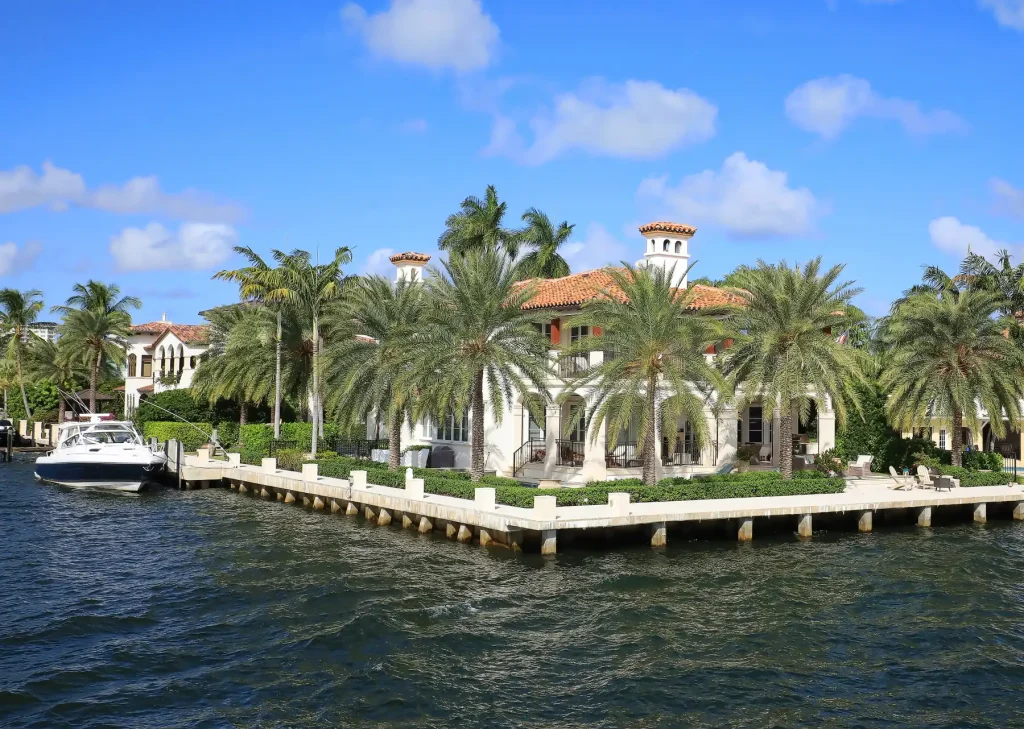
On a South Florida canal or Intracoastal property, the seawall is not just a retaining structure. It is the single component most likely to affect how much your home sells for, how long it takes to sell, and how much negotiation leverage a buyer has during due diligence.
Understanding the difference between repair and replacement costs — and when each makes sense — can mean tens of thousands of dollars in either direction.
The current cost spread
Based on current South Florida marine contractor pricing in 2026:
- Seawall repair — $150–$400 per linear foot, depending on the type and extent of work.
- Full seawall replacement — $600–$1,200 per linear foot installed, depending on material (vinyl, concrete, composite, or steel).
That’s a meaningful gap, but it’s not a simple “repair is always cheaper” decision.
The 50% rule
The industry rule of thumb is direct: if repair cost would exceed 50% of full replacement cost, replace instead. Patch-on-patch seawall work creates mismatched structures that fail unpredictably. A $40,000 repair on a wall that would cost $60,000 to replace is rarely worth it — the new 40 to 50-year seawall is the better investment.
Patch-on-patch seawall work isn’t economy. It’s deferred risk. The math almost always favors replacement once you cross 50%.
Age as a decision proxy
If you don’t have a current inspection report, seawall age provides a useful first-pass framework:
- Under 20 years old: repair is almost always the right answer.
- 20 to 35 years old: evaluate carefully; repair usually still makes sense unless structural damage is extensive.
- 35 to 50 years old: replacement often makes more economic sense than extensive repair.
- Over 50 years old: plan for replacement; repairs are a short-term bridge at best.
Why this matters more at sale
Seawall condition is one of the top three due diligence items on any waterfront purchase above $2M. A buyer who uncovers $75,000 in needed seawall work has significant leverage to either renegotiate price aggressively or walk away from the deal entirely.
Sellers with aging seawalls who haven’t addressed them — and haven’t gotten ahead of the issue with a current inspection — are making a costly mistake. The discount a buyer demands during due diligence almost always exceeds what the seller would have paid to address the issue directly.
If you’re preparing to sell
If you’re preparing to sell, get a professional seawall inspection before listing. A $400 inspection report can prevent a five-figure price concession during buyer due diligence. If work is needed, address it proactively. The return on a pre-listing seawall repair is almost always higher than accepting a post-inspection negotiation.
If you’re buying
Request recent seawall inspection records, the seawall’s age, and any prior repair permits. If none exist, commission a professional inspection as part of your due diligence. A $75,000 seawall issue identified during inspection often translates into a $100,000+ price reduction — this is where your negotiation leverage hides.
The Florida elevation factor
One additional planning consideration: Florida has implemented tiered sea-level-rise requirements that may require any newly replaced seawall to be raised to current code. This adds cost but future-proofs the property. Aging, unaddressed seawalls are why some waterfront homes trade at meaningful discounts in 2026.
Want the full repair vs. replacement guide?
Our Seawall Investment Special Report covers every repair type with cost ranges, the full replacement comparison, and contractor planning realities specific to Broward County. Four pages, delivered as a private PDF.